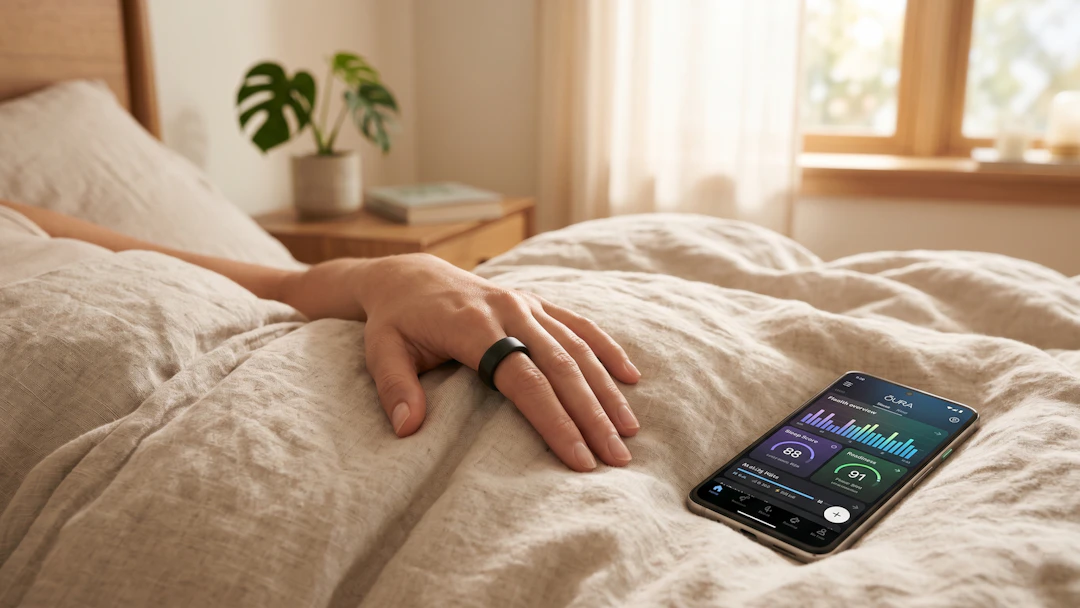
I wear an Oura Ring 4 to bed every night. Here's the thing, though: smart rings are basically a level playing field on core specs. Look at features alone and you can't honestly say Oura is a cut above the rest.
And yet Oura runs away with the market. There's no dramatic feature gap, so how did it climb this high? I got curious and dug into it, and the story turned out to be a genuinely interesting one.
And for nearly five years after launch, the Oura Ring barely sold at all. Today it's valued at around $11 billion. It has shipped roughly 5.5 million units cumulatively (about 3 million of those in just the past year), and revenue doubled from about $500 million in 2024 to about $1 billion in 2025. A ring that doesn't even win on features stayed silent for five years, then broke out in one. Let's walk through what happened, step by step.
The Turning Point Was COVID in 2020

It started with the pandemic.
A research study reported that the Oura Ring might be able to detect signs of illness a few days before COVID symptoms appeared. Pro sports jumped on it. The NBA bought them in bulk to monitor players (reportedly around 2,000 rings), and the WNBA adopted them for its bubble season. CNN and other outlets covered it all at once, and overnight the Oura Ring became "that ring the athletes wear."
What's striking is that Oura had barely changed the product itself in five years. What changed was the reason people felt they needed it. A gadget that just visualized your health suddenly took on a new meaning: a ring that might protect your life. Same hardware inside, but when the story changes, it sells.
The Move That Mattered Most: Boiling It Down to Three Numbers
What Oura did after that turning point is arguably what mattered most.
Most health devices love to sell you on "tons of data." Heart rate this, HRV that, on and on. Oura did the opposite. It compressed all that complex body data into just three scores.
- Sleep Score
- Readiness Score
- Activity Score
And every one is scored 0 to 100. No intimidating graphs, no medical jargon. It just tells you, "You're a 78 today." That turned out to be incredibly powerful.
Why? Because a score is something you want to share. Users started screenshotting their scores and posting them on social media on their own. "Got an 84 today." "Pulled an all-nighter, scored a 31, lol." Even celebrities like Kim Kardashian joined in, and the hashtags spread. Just as Strava turned running into something you show off, Oura turned sleep into something you show off.
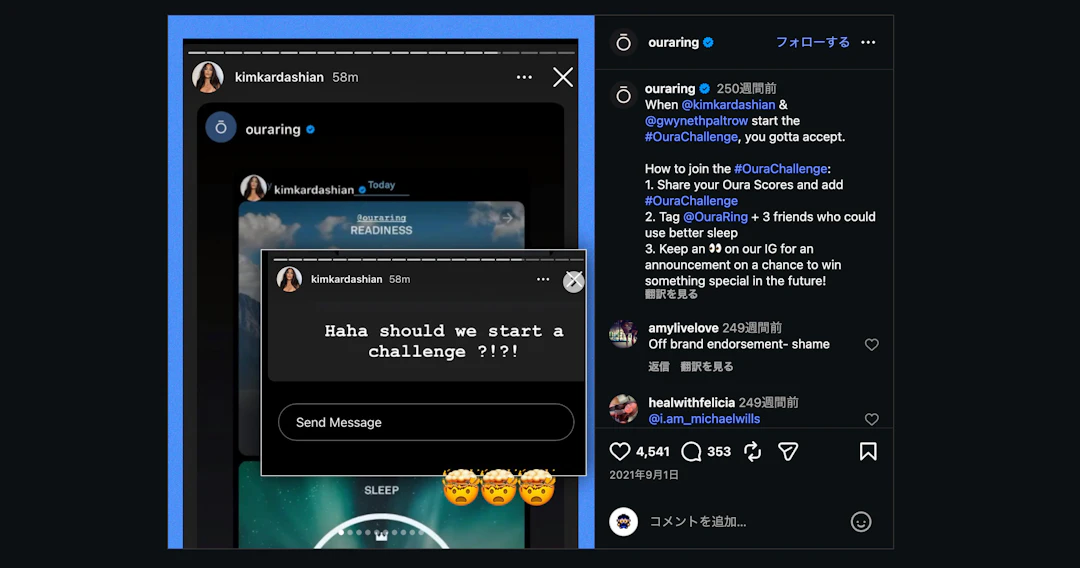
This part gets misunderstood a lot. There's a feel-good narrative that "celebrities just started using Oura on their own." But that's not quite true. Oura was running a deliberate influencer strategy. Its earned-media value jumped about 3.8x year over year in 2021. The buzz that looked spontaneous was carefully engineered behind the scenes, and honestly, that's the clever part.
It Didn't Stop at the Sale: The $5.99-a-Month Engine
The other mechanism is the subscription.
Oura introduced a monthly membership starting with its third generation (2021). In the US it's $5.99 a month. You buy the ring, and then you pay every month to unlock the detailed analysis. Naturally, there was pushback at first: "The ring is already expensive, and now you want a monthly fee too?"
Oura handled it deftly: existing users were grandfathered in for free, and only new buyers were charged. They nipped the backlash in the bud. And here's what really kicks in: the longer you use it, the more of your own health data piles up. Wear it for six months, a year, and the log itself becomes something you can't give up. Switch to a competitor's ring and all that accumulated history resets to zero. That's a hard thing to walk away from.
By the numbers, the subscription is only about 20% of revenue; the other 80% is the hardware. But the real value isn't the dollar amount, it's that customers can't quit. Oura itself says more than 80% of members are still subscribed a year later (a self-reported figure, so take it with a grain of salt, but the direction is clear enough). A ring maker had quietly turned into a subscription company.
Every Pre-Purchase Worry, Already Defused
Finally, a quick word on how they sell it. This, too, is thorough.
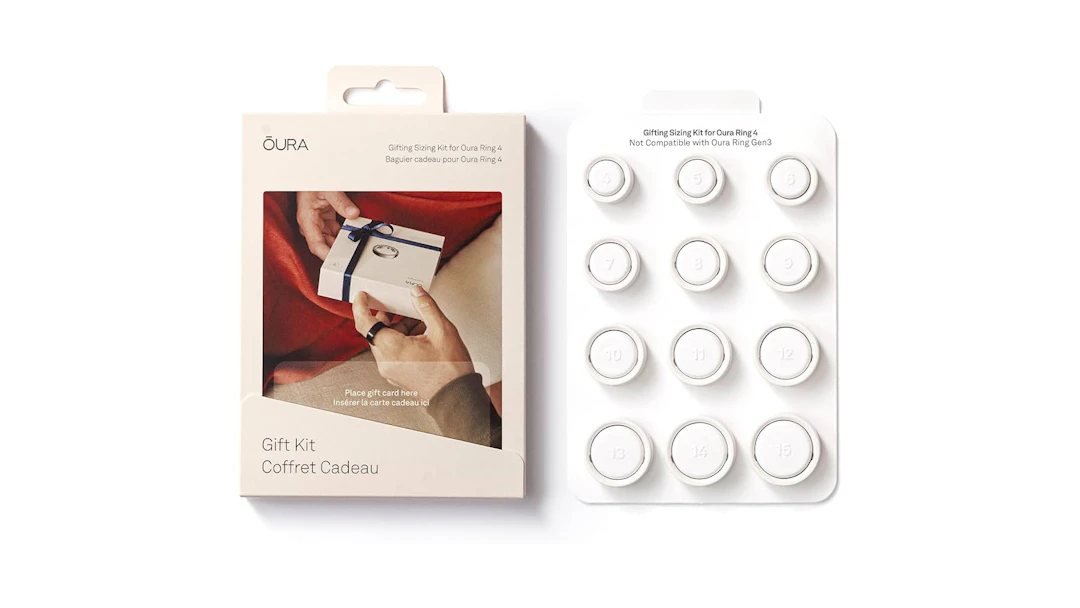
The biggest hurdle for a ring is sizing. When you buy online, you can't tell whether it'll fit your finger, and that quietly makes people hesitate. So what does Oura do? It ships you a free sizing kit first. You try it on for a few days, lock in your size, and only then place the real order. The pre-purchase anxiety gets defused before you ever buy.
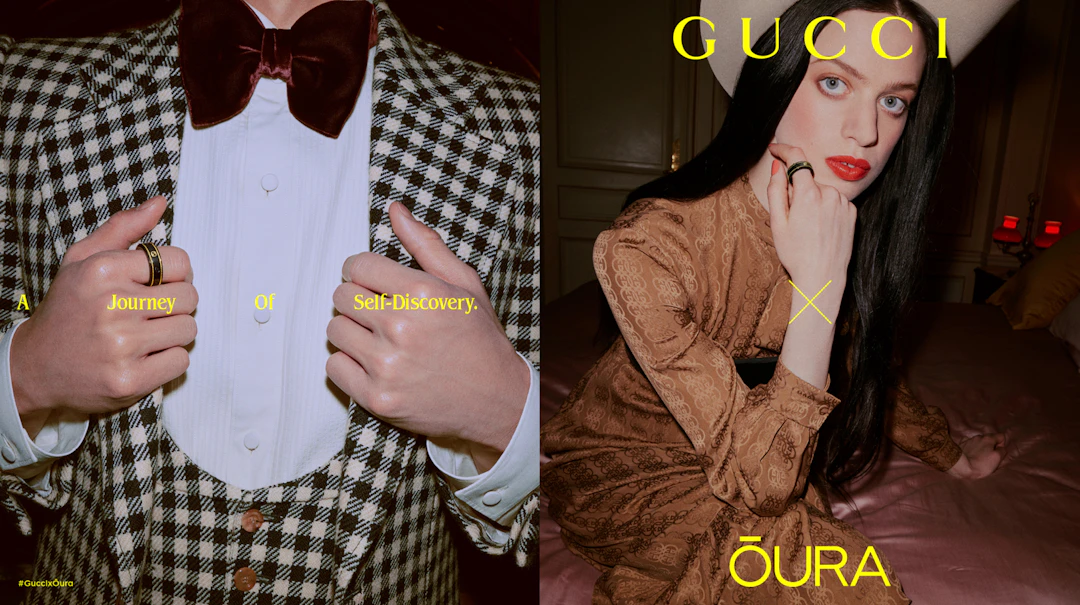
The pricing is clever, too. The internals (the sensors) are identical, yet they offer higher-end models with different finishes for an extra $150 or so. No performance difference, but a higher price. That's less gadget pricing and more jewelry pricing. The capper is the Gucci collaboration: a luxury model priced close to a thousand dollars, going after the wealthy and the fashion crowd as well.
Believe in the universal theme of sleep and keep refining it, then once it breaks out, get people sharing three numbers, then lock them in with a monthly fee. Looking back, that single thread runs cleanly through the whole story.
The answer to the question we started with, how Oura ran away with the market without winning on features, is probably right here. Oura didn't win on features. It won on how people find it, how it's communicated, and how it keeps you coming back. Precisely because every smart ring is so similar on the inside, that difference translated directly into a difference in market share.
As for which model to actually pick, I've compared the major smart rings hands-on, based on real-world testing.
So, Is It Actually Worth Buying?
We've talked strategy this whole time, so let's end on the practical side. As I said up top, I'm one of the people wearing this to bed every night. From that vantage point, here's roughly who it suits.
- People who are fine with a smartwatch during the day but find wearing something on the wrist to sleep uncomfortable. A ring is almost stress-free overnight.
- People who care less about pushing hard in workouts and more about dialing in recovery and sleep quality. For everyday condition management, Oura fits nicely.
- People who want to look at the numbers and tweak their habits a little. Those three scores change your behavior more than you'd expect.
On the flip side, if you really can't stand subscriptions, it might be worth pausing to think it over. I'll be honest about that.
Current Model and Pricing (as of June 2026)
The latest model you can buy now is the Oura Ring 5. It launched in June 2026 and trims about 40% off the volume of the previous Oura Ring 4, billing itself as "the world's smallest smart ring."
Pricing comes in two tiers based on the finish.
Color | Price |
|---|---|
Silver / Black | $349 |
Gold / Deep Rose / Stealth / Brushed Silver | $499 |
On top of that, the membership runs $5.99 a month (or $69.99 a year). The "same internals, different look" premium model I mentioned earlier is exactly this extra $150. Performance is identical across all colors, so this is purely a matter of taste.
- If you want the best value, go with Silver or Black. You won't be missing a single feature.
- If you care about hiding scratches and the feel of owning something nice, Stealth (a matte black) or Gold. Since you wear it around the clock, plenty of people find the extra $150 worth it.
Before You Buy: Measure Your Size First
The single biggest way to mess up a smart ring purchase is sizing. Finger thickness varies from finger to finger and even by time of day, so I strongly recommend trying the sizing kit for a few days before placing your real order. Skip that step and eyeball it, and if it doesn't fit, it's a quiet hassle to deal with.
Where to Buy
Besides Oura's official online store, you can find it on Amazon, at Best Buy, and at Target. Pricing, promotions, and sizing-kit availability vary by retailer, so it's easiest to just buy from wherever you normally shop.
If you're wondering what sleep scores actually show up, or whether it really changes your daily life, I cover the hands-on experience in detail in a separate Oura Ring 4 sleep-accuracy review.